

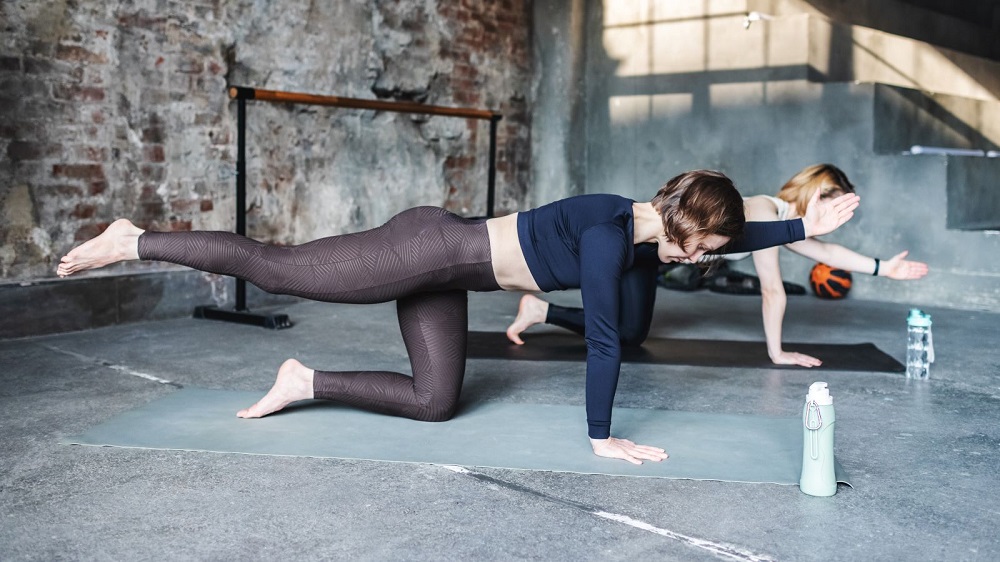
Back pain is one of the most common physical ailments reported worldwide. Millions of adults experience localized lower back discomfort, upper back stiffness, or recurring spinal strain at some point in their lives. Modern sedentary lifestyles, characterized by prolonged sitting at desk jobs, frequent slouching over electronic screens, and minimal daily physical activity, contribute significantly to back dysfunction. When the postural muscles supporting the spine become weak, tight, or imbalanced, the spinal column bears undue pressure, leading to muscle spasms, disc irritation, and chronic pain.
Preventing back pain and rehabilitating a weak spine requires a proactive, exercise-based approach. Rather than relying solely on passive treatments, strengthening the core, glutes, and posterior chain musculature builds a natural muscular brace around the spine. Engaging in targeted, low-impact strength and stability exercises restores spinal alignment, enhances joint mobility, and builds physical resilience against daily physical stress.
Understanding the Muscular Foundation of Spinal Support
The human back is not an isolated structure; it operates as part of an integrated kinetic chain. Achieving lasting freedom from back pain requires strengthening several key muscle groups that surround and stabilize the spine.
Primary muscle groups responsible for back stability include:
-
Erector Spinae: A deep network of muscles running vertically along the length of the spine that maintains erect posture and facilitates controlled backward bending.
-
Transverse Abdominis: The deepest layer of abdominal muscles that wraps horizontally around the torso like a protective corset, creating intra-abdominal pressure to stabilize the lumbar spine.
-
Gluteus Maximus and Medius: The powerful hip and buttock muscles that stabilize the pelvis during walking, standing, lifting, and running, preventing excessive tilt in the lower back.
-
Latissimus Dorsi and Rhomboids: Large muscles spanning the upper and mid-back that draw the shoulders back, prevent forward rounding, and support the thoracic spine.
-
Multifidus: Small, powerful deep muscle slips running along the vertebral column that provide segmental stabilization to individual spinal vertebrae.
Core and Lumbar Stability Exercises
Dynamic stability is essential for lower back health. These exercises focus on bracing the deep core and lumbar spine without placing compressive forces on the spinal discs.
The Bird-Dog
The bird-dog is a foundational spinal stability exercise that strengthens the core and erector spinae while teaching the body to move the limbs independently of the torso.
Begin on all fours in a tabletop position, placing hands directly beneath the shoulders and knees beneath the hips. Engage the core to maintain a flat, neutral spine. Slowly extend the right arm forward and the left leg backward until both limbs are parallel to the floor, maintaining hip squareness toward the ground. Hold the extended position for three seconds, return slowly to the starting position, and repeat on the opposite side. Complete three sets of ten repetitions per side.
The Dead Bug
The dead bug focuses on deep abdominal bracing, training the transverse abdominis to support the lower back while the limbs are in motion.
Lie flat on your back on a exercise mat with arms extended straight up toward the ceiling and knees bent at ninety degrees over the hips. Press your lower back firmly into the floor, eliminating any natural arch. Slowly lower your right arm backward past your head while extending your left leg straight forward toward the floor, keeping both limbs hovering just above the ground. Return to the starting position under control and switch sides. Perform three sets of twelve alternating repetitions.
The Forearm Plank
Planks provide isometric endurance for the entire core girdle, building stamina in the stabilizing muscles that prevent lower back fatigue during prolonged standing.
Position yourself face down on an exercise mat, resting on your forearms with elbows placed directly underneath the shoulders. Extend your legs straight back, resting on the balls of your feet. Engage your glutes, brace your abdomen, and lift your body into a straight line from your head to your heels. Avoid letting your hips sag toward the ground or arching your lower back upward. Hold this position for thirty to sixty seconds, breathing consistently. Repeat for three to four sets.
Posterior Chain and Glute Strengthening Exercises
A major root cause of lower back pain is gluteal amnesia, a condition where the glute muscles become inactive due to prolonged sitting. When the glutes fail to fire properly during movement, the lower back muscles are forced to compensate, leading to severe muscular fatigue and strain.
Glute Bridges
Glute bridges reactivate dormant buttock muscles, align the pelvis, and build strength in the hamstrings and lower back without spinal loading.
Lie flat on your back with knees bent and feet resting flat on the floor, hip-width apart. Position your feet close enough so your fingertips can lightly touch your heels. Press your lower back into the mat, engage your core, and drive through your heels to lift your hips toward the ceiling until your body forms a straight line from knees to shoulders. Pause at the top and squeeze your glutes forcefully for two seconds before lowering back down under control. Complete three sets of fifteen repetitions.
The Superman Exercise
This bodyweight exercise targets the entire posterior chain, specifically strengthening the upper back, lumbar erector spinae, and glutes simultaneously.
Lie face down on a comfortable mat with arms extended overhead and legs straight back. Keep your head in a neutral position, looking down at the mat to avoid straining your neck. Inhale and lift your arms, chest, and legs simultaneously a few inches off the floor by engaging your back and glutes. Hold the elevated position for two to three seconds, then lower back down slowly to the floor. Complete three sets of twelve repetitions.
Romanian Deadlifts with Light Resistance
The Romanian deadlift teaches proper hip hinge mechanics, training you to bend at the hips rather than rounding the lumbar spine when lifting objects.
Stand erect with feet hip-width apart, holding a light pair of dumbbells or a barbell in front of your thighs. Maintain a soft bend in your knees, pull your shoulders back, and engage your core. Push your hips back as if trying to touch a wall behind you, lowering the weight along your shins while keeping your spine completely straight. Stop when you feel a strong stretch in your hamstrings, usually near mid-shin level. Squeeze your glutes and push your hips forward to return to an upright position. Perform three sets of ten to twelve repetitions.
Upper Back and Thoracic Mobility Exercises
Mid-back stiffness contributes directly to lower back and neck strain. Opening up the thoracic spine improves posture and reduces compensatory strain on adjacent joints.
-
Face Pulls: Using a resistance band anchored at chest height, pull the band toward your forehead while driving your elbows wide and squeezing your shoulder blades together. This strengthens the rear shoulders and rhomboids, reversing forward desk posture.
-
Cat-Cow Stretch: Positioned on all fours, inhale as you arch your back gently and lift your chest toward the ceiling (cow pose). Exhale as you round your spine upward toward the sky, tucking your chin toward your chest (cat pose). Move fluidly between both positions for ten to twelve breaths to improve vertebral mobility.
-
Thoracic Spine Rotations: Kneeling on all fours, place one hand behind your head. Rotate your elbow inward toward the opposite wrist, then open your chest outward, pointing the elbow toward the ceiling. Perform ten rotations per side to maintain rotational mobility in the mid-back.
Exercise Strategy for Back Pain Prevention
| Exercise Name | Primary Targeted Muscle Group | Movement Focus | Recommended Sets and Reps |
| Bird-Dog | Core, Erector Spinae, Glutes | Spinal Stability and Coordination | 3 sets of 10 reps per side |
| Dead Bug | Transverse Abdominis, Deep Core | Anti-Extension Core Bracing | 3 sets of 12 alternating reps |
| Glute Bridge | Gluteus Maximus, Hamstrings | Pelvic Alignment and Glute Activation | 3 sets of 15 reps |
| Forearm Plank | Entire Core, Shoulder Girdle | Isometric Endurance | 3 to 4 sets of 30-60 seconds |
| Romanian Deadlift | Hamstrings, Glutes, Erector Spinae | Hip Hinge Mechanics | 3 sets of 10-12 reps |
| Superman | Upper/Lower Back, Glutes | Posterior Chain Extension | 3 sets of 12 reps |
Frequently Asked Questions
Is it safe to exercise if I am currently experiencing mild lower back pain?
Yes, for most cases of non-specific, mild lower back pain, gentle movement and low-impact stability exercises are far more effective for recovery than strict bed rest. Bed rest can cause back muscles to stiffen and weaken further. However, stick to low-impact movements like the bird-dog or glute bridges, avoiding heavy loading or aggressive forward bending.
How many days a week should I perform back strengthening exercises?
For optimal results, perform core and back stabilization exercises three to four times a week. Gentle mobility stretches like the cat-cow can be done daily, while weighted exercises like Romanian deadlifts require forty-eight hours of muscle recovery between sessions.
What should I do if a specific exercise causes sharp pain in my back?
If an exercise causes sharp, localized, or radiating pain, stop performing that movement immediately. Exercise should create a mild muscular sensation or gentle stretch, but never sharp joint or nerve pain. Re-evaluate your form, reduce resistance, or substitute the movement with a less demanding stability exercise.
How does prolonged sitting contribute to chronic lower back pain?
Prolonged sitting causes the hip flexor muscles at the front of the hips to become tight and short. Tight hip flexors pull the pelvis forward into an anterior tilt, which arches the lower back unnaturally and compresses the lumbar spine. Sitting also deactivates the glutes, forcing lower back muscles to overwork.
Can strengthening my abdominal muscles alone cure my lower back pain?
Not necessarily. While a strong core is essential, focusing exclusively on front abdominal muscles like the rectus abdominis without strengthening the back muscles and glutes creates muscular imbalances that can actually worsen back strain. Balanced strengthening across the entire torso and posterior chain is necessary.
What is the difference between a neutral spine and a flat spine during exercise?
A neutral spine maintains the natural, gentle double-S curves of the human spinal column, where the neck and lower back curve slightly inward and the upper back curves gently outward. A flat spine occurs when those natural protective curves are flattened out completely, which can increase compressive strain during certain movements.
What red flag symptoms indicate I should see a doctor before starting an exercise routine?
You should consult a physician immediately before exercising if your back pain is accompanied by numbness, tingling, or weakness radiating down your legs, unexplained weight loss, fever, severe nocturnal pain, or any sudden loss of bowel or bladder control.
Comments are closed.